Planning Basics
Tokyo to Kyoto by Shinkansen: Fares, Seats & Luggage Rules
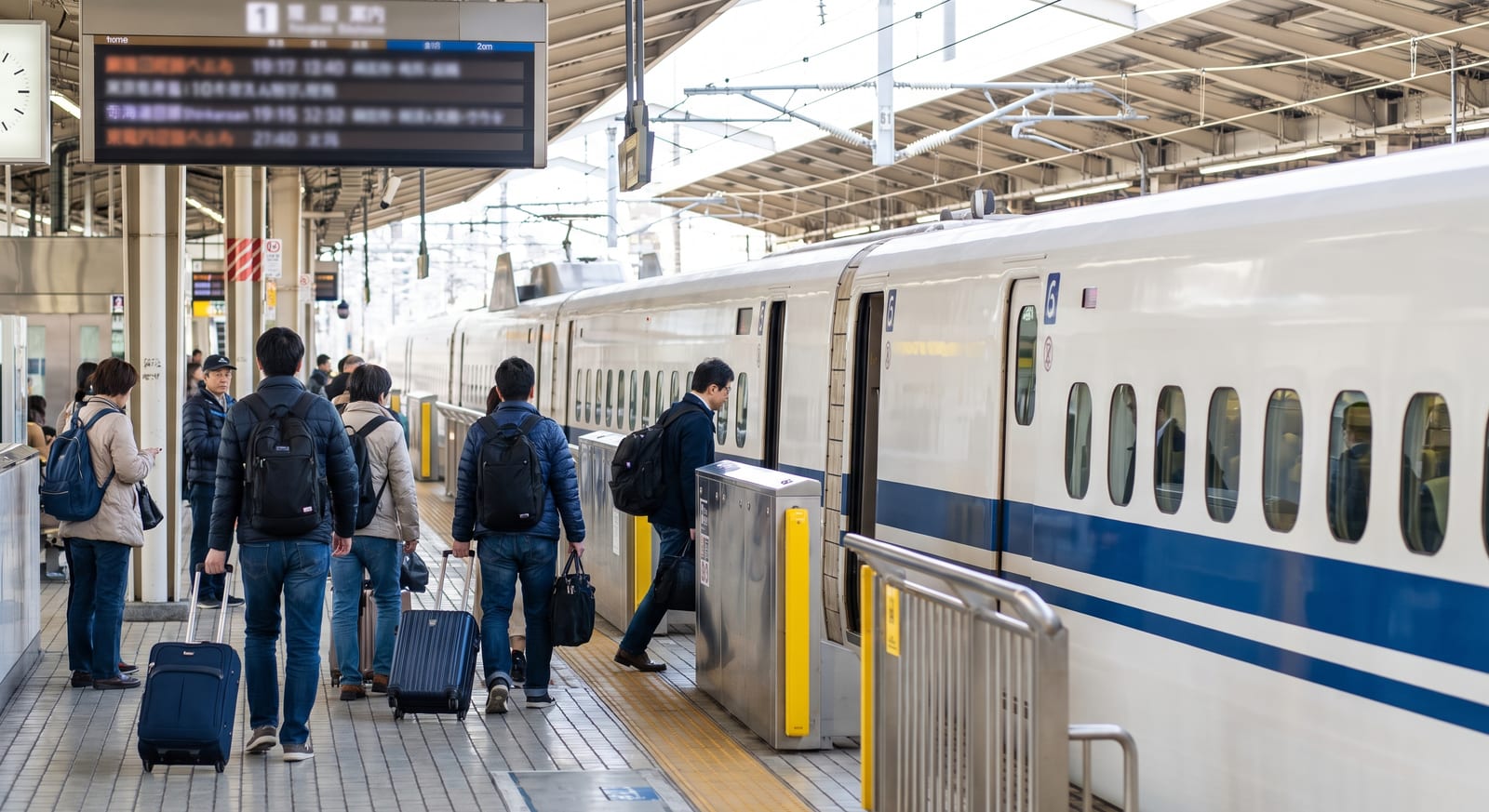
The Tokaido Shinkansen runs Tokyo to Kyoto in a little over two hours, several times an hour, and it is by a wide margin the best way to make the trip. The decisions that actually matter are which service to take, whether to reserve, and — the one that catches people out at the gate — whether your suitcase needs its own reservation.
Nozomi or Hikari?
| Nozomi | Hikari | |
|---|---|---|
| Journey time | 2 hr 15 min | 2 hr 40 min |
| Frequency | Several per hour | Roughly 2 per hour |
| Non-reserved fare | ~¥13,970 | ~¥13,320 |
| Japan Rail Pass | Supplement ~¥4,960 | Fully covered |
If you are paying cash, take the Nozomi — it is faster, more frequent, and barely more expensive.
If you have a Japan Rail Pass, take the Hikari. The Nozomi supplement of around ¥4,960 buys you 25 minutes, which is poor value on a journey you are otherwise making for free.
Smart EX, the online booking service for the Tokaido Shinkansen, offers discounted advance fares — booking 21 days out can bring Tokyo–Kyoto down to roughly ¥11,820, saving over ¥2,000 against the walk-up price. You can register with a foreign credit card. If your dates are fixed, there is no reason not to.
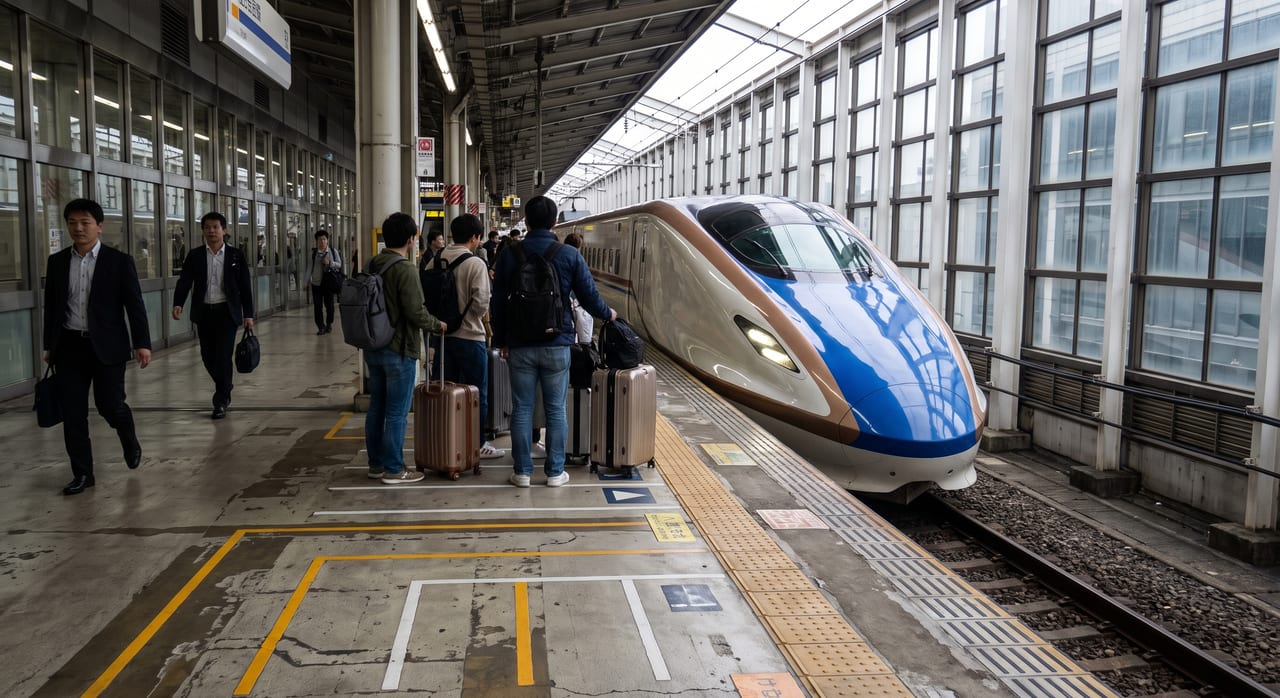 TOKYO STATION
 Reserved vs Non-Reserved Seats
Cars 1–3 on most Nozomi services are non-reserved: turn up, queue on the platform marking, take any free seat. The rest are reserved.
Non-reserved is genuinely fine on a normal weekday — trains run every 10–20 minutes and you will get a seat. Reserve when you are travelling as a group and want to sit together, when you are travelling during Golden Week, Obon, or the New Year period, or when you have a large suitcase (see below).
During Golden Week (late April to early May), Obon (mid-August), and the New Year period, non-reserved cars fill completely and people stand for the entire two hours with luggage. Reserve well ahead for travel in those windows — this is the one time the advice genuinely changes.
The Oversized Luggage Rule
This is the rule that surprises visitors, because it is specific and it is enforced.
If your suitcase’s three dimensions added together come to between 160 cm and 250 cm, you must book a “seat with oversized baggage area” — a reserved seat in the last row of a car, with the space behind it allocated to you. There is no extra charge for the reservation itself, but boarding with such a bag without one means paying a fee on the train.
Bags totalling under 160 cm need nothing special. They go on the overhead rack or in the space in front of your knees. Most standard check-in suitcases fall under this threshold — measure yours before assuming.
Anything over 250 cm total cannot be carried on at all.
Japan’s takkyubin courier network will move a suitcase from your Tokyo hotel to your Kyoto hotel overnight for roughly ¥2,000–2,500. Hand it in at the front desk before mid-afternoon and travel with a day bag. For anyone with a large case, this is cheaper than the stress and turns a crowded transfer into a pleasant one.
Where to Sit for Mount Fuji
Travelling Tokyo to Kyoto, Fuji appears on the right-hand side — seats D and E in an ordinary car. It comes into view roughly 40–45 minutes after leaving Tokyo, between Shin-Yokohama and Nagoya, and stays visible for several minutes.
Your odds depend heavily on season. Clear winter air from November through February gives the most reliable views; summer haze frequently hides the mountain entirely. Do not build the trip around it.
Practical Notes for the Journey
Tokyo Station platforms. Tokaido Shinkansen services use platforms 14–19, behind their own ticket gates. If you are transferring from a regular JR line, allow 15 minutes to walk across and through the gate.
Food. Buy an ekiben — a station bento — before boarding. The selection at Tokyo Station is excellent and eating on the Shinkansen is entirely normal, unlike on local trains. Trolley service has been discontinued on most services, so buy before you board.
Power and Wi-Fi. Every seat on current Tokaido rolling stock has a power outlet, and free Wi-Fi is available across the line.
Arriving. Kyoto Station’s Shinkansen platforms sit on the south side, with their own gates leading to both the Hachijo (south) and central exits. The subway, buses, and taxi ranks are all on the Karasuma (north) side.
Read Next
Landing at an airport instead? See Kansai Airport to Kyoto for the Haruka and the alternatives.
Once you arrive: How to Get Around Kyoto covers IC cards, buses, and the routes that actually work, and Where to Stay in Kyoto breaks down the neighborhoods. To start planning the days, see the Kyoto First-Timer Guide.
Arriving in Kyoto
Off the Shinkansen
and straight into Gion
Kyoto Station puts you 10 minutes from the old quarter. Our Gion Sake Walk runs nightly with a local guide — an easy first evening when you've just arrived and don't want to plan anything.
FAQ
How long does the Shinkansen take from Tokyo to Kyoto? ▼
How much is the Shinkansen from Tokyo to Kyoto? ▼
Is the Nozomi covered by the Japan Rail Pass? ▼
Can I take a large suitcase on the Shinkansen? ▼
Should I sit on the left or right side of the Shinkansen for Mount Fuji? ▼
Related Guides
Kansai Airport to Kyoto: Every Route Compared (2026)
How to get from Kansai Airport (KIX) to Kyoto: the Haruka express, limousine bus, shared shuttle, and taxi compared on time, cost, and luggage — plus what to do if you land late.
Kyoto First‑Timer Guide: Plan the Perfect 1–3 Day Trip
Clear, practical guide for first‑time visitors to Kyoto: when to visit, where to stay, how to get around, budgets, and the perfect 1–3 day itineraries.
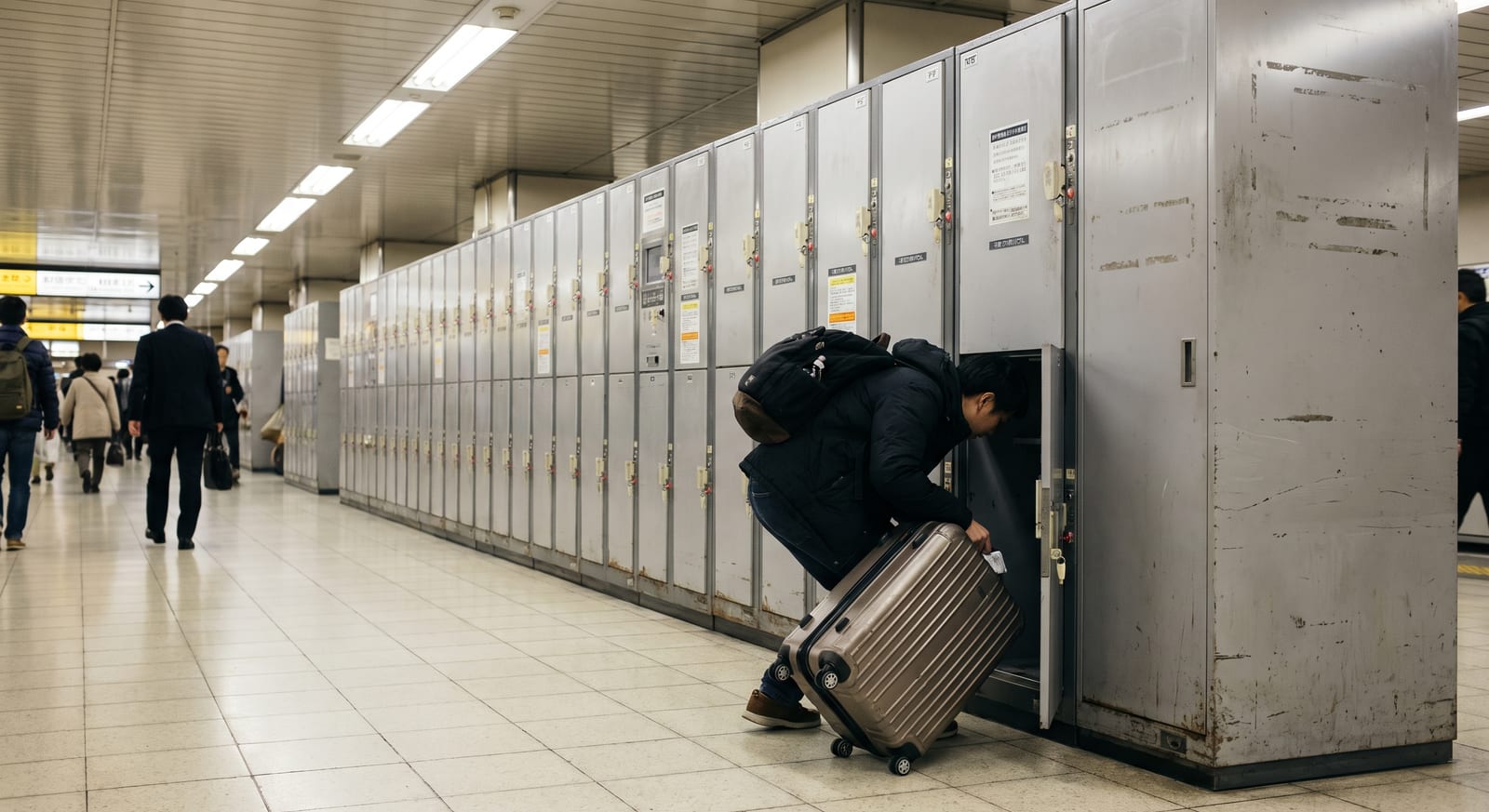
Luggage in Kyoto: Coin Lockers, Storage & Sending Bags Ahead
How to deal with suitcases in Kyoto: coin locker sizes and prices, what to do when they're all full, staffed storage counters, and how takkyubin luggage forwarding works between hotels.
Local guide based in Gion, Kyoto. Leading intimate walking tours and sake experiences since 2018. Passionate about connecting travelers with authentic Kyoto culture.