Planning Basics
Kyoto Station Guide: Exits, Bus Stops & Not Getting Lost
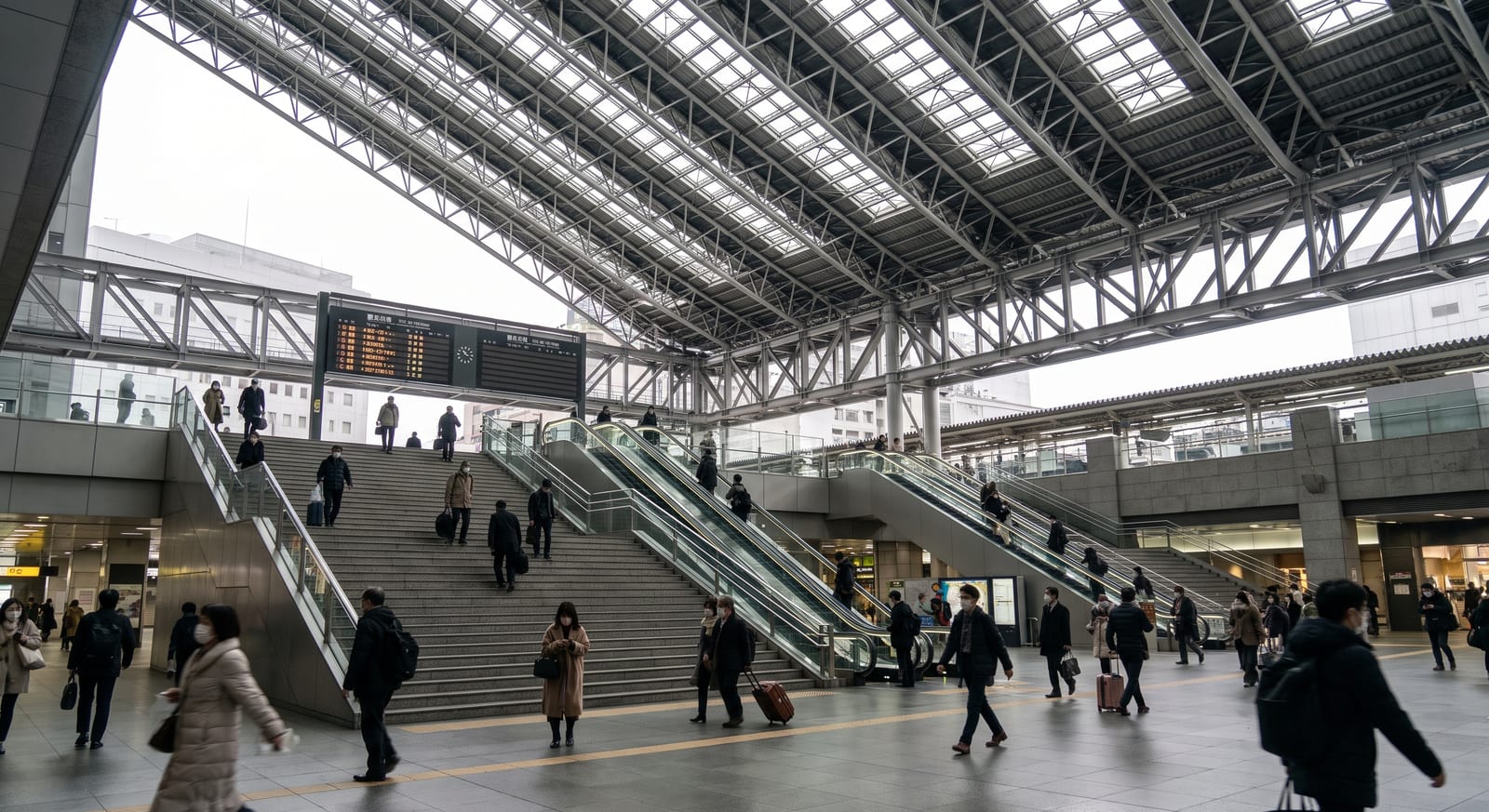
Kyoto Station is the second-largest station building in Japan, serves five separate rail operators, and hides its bus terminal behind a fifteen-storey atrium. Almost every Kyoto trip passes through it several times, and almost every visitor loses twenty minutes to it at least once. This guide covers the layout that matters: which exit, which stand, and how long each transfer really takes.
The One Thing to Understand: North vs South
Kyoto Station has two sides, and they are not equivalent.
Karasuma (north / central) exit faces the city. The bus terminal, the subway entrance, the taxi rank, the Kyoto Tower, and the walk into downtown are all here. This is the correct exit roughly 90% of the time.
Hachijo (south) exit faces away from the city. It serves the Kintetsu line to Nara, the airport limousine bus, a cluster of business hotels, and most of the coin lockers. There is little else.
Crossing between them means walking through or around the station building — 10 to 15 minutes with luggage. Getting this wrong is the single most common Kyoto Station mistake.
If you arrive on the airport limousine bus, you land at Hachijo — the wrong side for the subway, the city buses, and downtown. Budget the extra 10–15 minutes to cross, or take a taxi from the Hachijo rank rather than dragging suitcases through the concourse.
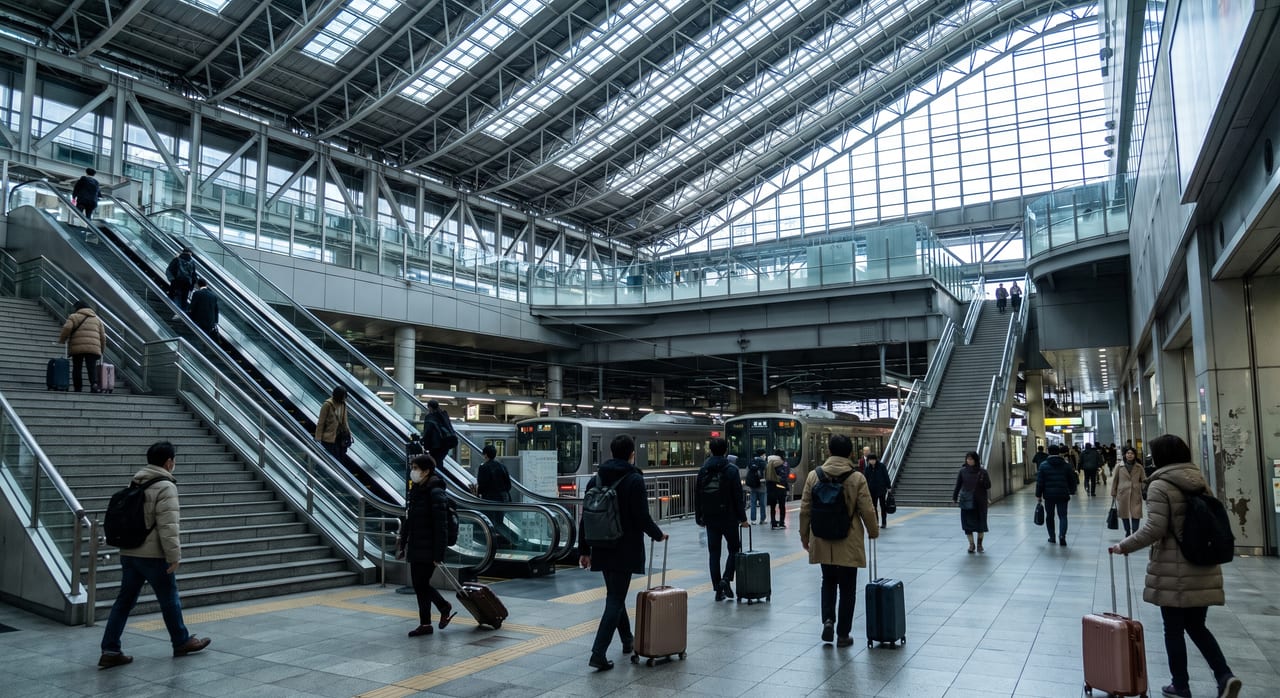 KYOTO STATION
 The Bus Terminal
The bus terminal sits directly outside the Karasuma exit, arranged as numbered stands (A1–A3, B1–B3, C, D1–D3) around a large plaza. Each stand has a digital board listing the next departures.
| Destination | Bus | Stand | Time |
|---|---|---|---|
| Kinkakuji (Golden Pavilion) | 205 | B3 | ~40 min |
| Kiyomizudera (Gojo-zaka) | 206 | D2 | ~15 min |
| Gion / Yasaka Shrine | 206 | D2 | ~20 min |
| Ginkakuji (Silver Pavilion) | 5 | A1 | ~40 min |
Two things worth knowing. First, do not board a “Rapid” 205 if you are going to Kinkakuji — the rapid service skips it. Second, the buses that matter to tourists are also the ones that fill at the terminus, so if you can board at the very start of the route you will get a seat; if you join further along in peak season you probably will not.
Riding Bus 205 all the way from Kyoto Station to Kinkakuji takes about 40 minutes and is frequently standing-room-only. Instead, take the Karasuma subway line north to Kitaoji (about 13 minutes, guaranteed seat), then Bus 204 or 205 for the last 11 minutes. Same destination, less of your day spent in traffic.
Trains: Who Runs What
Five operators use Kyoto Station, on different levels and behind different gates:
- JR local and regional lines (Nara Line for Fushimi Inari, Sagano Line for Arashiyama, Kyoto Line for Osaka) — main ground-floor gates.
- Tokaido Shinkansen — its own gates on the south side. Separate ticket, separate barrier.
- Haruka airport express — platform 30, at the far south-west end. A long walk from the central concourse.
- Kintetsu line (for Nara) — a separate station on the Hachijo side, one level down.
- Karasuma subway line — underground, accessed from the Karasuma side.
Transfer times to allow: 15 minutes between regular JR and the Shinkansen, 10 minutes to reach the Haruka platform, 10 minutes to the Kintetsu or subway. These are walking times inside a very large building, not queue times.
Getting to the Main Sights
| From Kyoto Station to | Best option | Time |
|---|---|---|
| Fushimi Inari | JR Nara Line to Inari (2 stops) | 5 min |
| Arashiyama | JR Sagano Line to Saga-Arashiyama | 15 min |
| Gion | Bus 206 from stand D2 | ~20 min |
| Kiyomizudera | Bus 206 to Gojo-zaka, then 10 min uphill | ~25 min |
| Kinkakuji | Subway to Kitaoji, then Bus 204/205 | ~25 min |
| Downtown (Shijo) | Karasuma subway, 2 stops | 5 min |
| Nara | Kintetsu Express from Hachijo side | 45–50 min |
| Osaka | JR Special Rapid | 30 min |
The full reasoning behind each of these is in How to Get Around Kyoto.
Luggage, Food, and Waiting
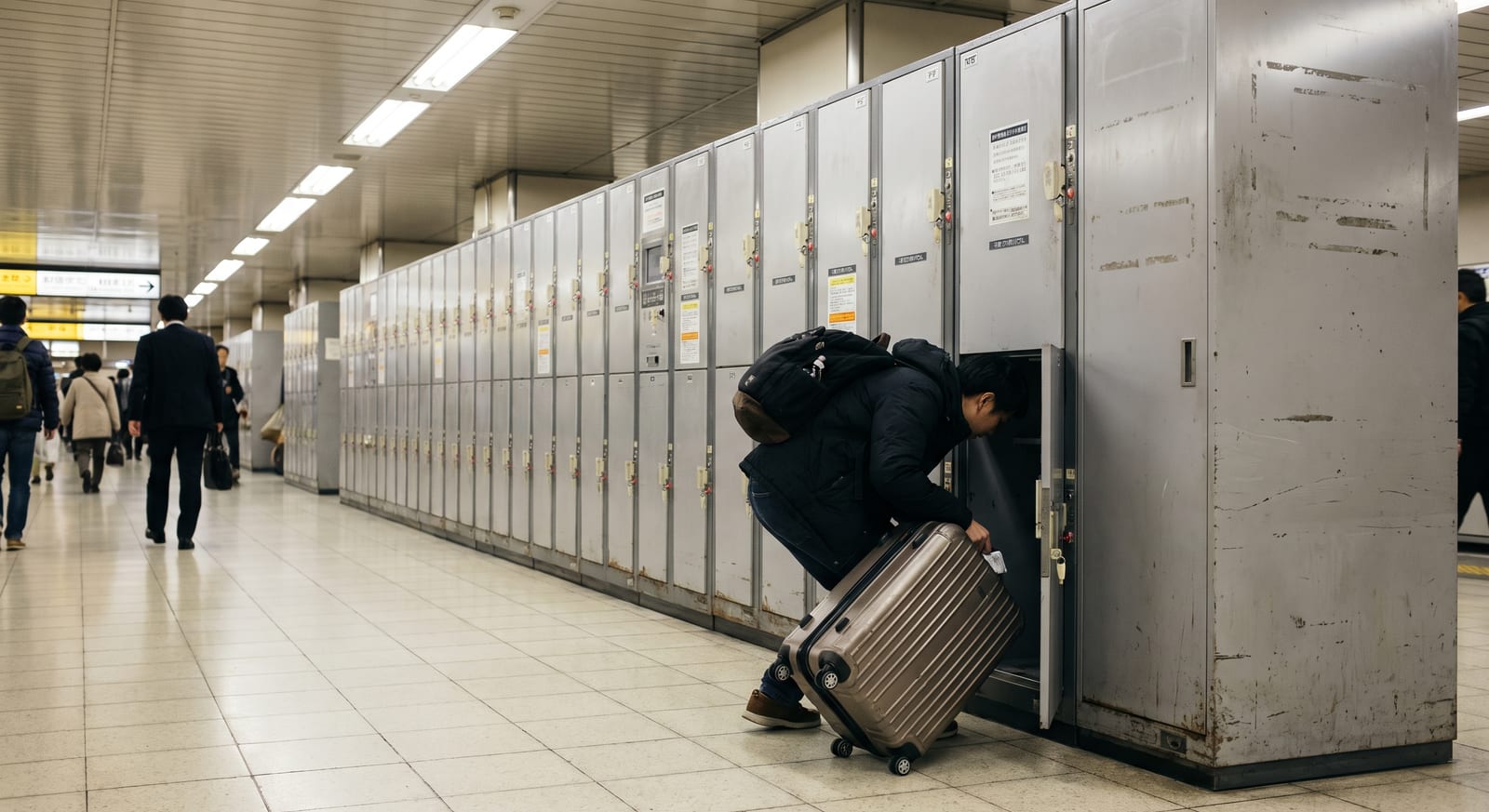
Coin lockers run about ¥400 (small), ¥500 (medium), and ¥700 (large), and most take IC cards as well as coins. There are over 1,500 on the Hachijo side alone, plus banks near the Karasuma exit and in the Porta underground mall. In peak season they are largely full by 10am — if you are relying on one, arrive early or go straight to a staffed service.
Crosta Kyoto, on the B1 floor, is the staffed alternative: it takes bags too large for a locker and also runs same-day delivery to Kyoto hotels. If you are arriving before check-in or leaving after checkout, this is usually the better answer than hunting for an empty locker.
Eating. The station building has a full restaurant floor (Kyoto Ramen Koji on the 10th floor gathers regional ramen shops), Isetan department store’s food hall in the basement, and the Porta underground mall. It is a genuinely good place to eat, which is useful on a rainy arrival day.
The Skyway walkway and rooftop terrace on the upper floors of the station building are free and open to the public, with a wide view north over the city to the mountains. It is a decent way to spend the twenty minutes before a train, and considerably cheaper than the Kyoto Tower observation deck across the road.
Read Next
Arriving from elsewhere: Kansai Airport to Kyoto and Tokyo to Kyoto by Shinkansen.
Heading out for the day: How to Get Around Kyoto for the full transport picture, or straight into the 1-Day Kyoto Itinerary. Day-tripping from here? Osaka, Nara, and Uji all start at this station.
20 Minutes From This Platform
Bus 206 goes to Gion.
Take it in the evening
The old quarter is a short ride from the station and a different place after 8pm. Our Gion Sake Walk covers the lantern-lit lanes with a local guide, plus the bars with no sign on the door.
FAQ
Which exit should I use at Kyoto Station? ▼
Where is the bus terminal at Kyoto Station? ▼
How do I get from Kyoto Station to Gion? ▼
How long do I need to change trains at Kyoto Station? ▼
Is there luggage storage at Kyoto Station? ▼
Related Guides
Kansai Airport to Kyoto: Every Route Compared (2026)
How to get from Kansai Airport (KIX) to Kyoto: the Haruka express, limousine bus, shared shuttle, and taxi compared on time, cost, and luggage — plus what to do if you land late.
Kyoto First‑Timer Guide: Plan the Perfect 1–3 Day Trip
Clear, practical guide for first‑time visitors to Kyoto: when to visit, where to stay, how to get around, budgets, and the perfect 1–3 day itineraries.
Luggage in Kyoto: Coin Lockers, Storage & Sending Bags Ahead
How to deal with suitcases in Kyoto: coin locker sizes and prices, what to do when they're all full, staffed storage counters, and how takkyubin luggage forwarding works between hotels.
Local guide based in Gion, Kyoto. Leading intimate walking tours and sake experiences since 2018. Passionate about connecting travelers with authentic Kyoto culture.